
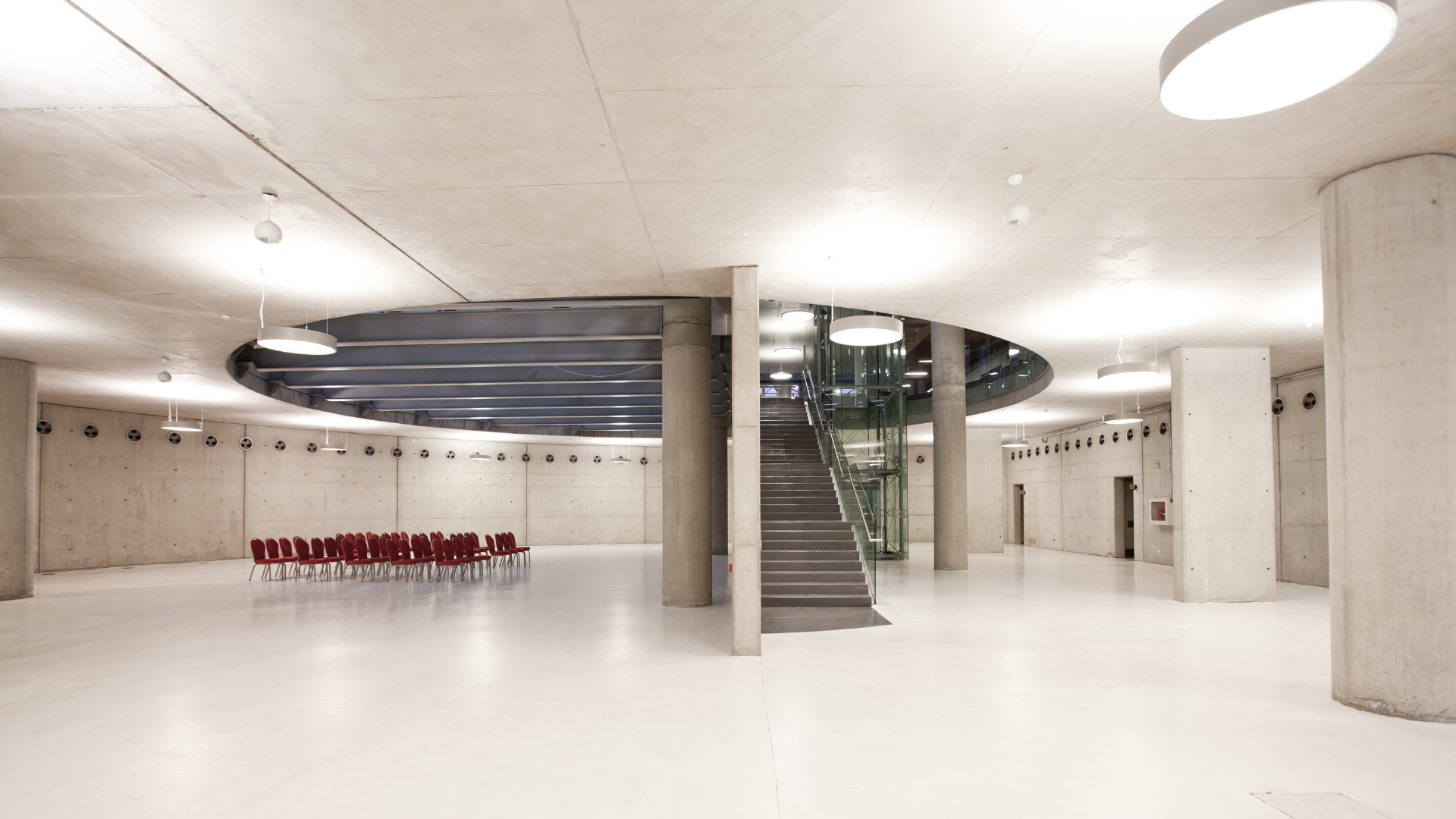
Whether you’re designing a new building or reviewing your fire protection strategy, choosing the right fire protection system is essential. One of the most common comparisons when choosing a passive fire protection is fire curtains vs fire shutters. While both are designed to help contain fire and smoke, they work in different ways and suit different types of buildings and applications.
Modern architecture increasingly favours large open spaces and flexible layouts, creating new challenges for compartmentation. As a result, many architects and building safety managers are turning to fire curtains as a discreet alternative to traditional fire shutters without compromising fire safety.
What are Fire Curtains?
Fire curtains are automatically deploying fire-resistant barriers that remain hidden within a compact headbox until activated by the building’s fire alarm system or integrated smoke detection.
When deployed, the curtain creates a temporary fire-resistant barrier that helps contain fire and smoke, protecting vital escape routes and slowing the spread of flames between building compartments.
Unlike permanent barriers, fire curtains allow architects to maintain open-plan layouts while ensuring buildings remain compliant with fire safety requirements such as the Building Safety Act.
What are Fire Shutters?
An automatic fire shutter is a rigid, rolling steel barrier designed to close over an opening during a fire. Similar in appearance to a security shutter, it descends when activated to compartmentalise a building and help prevent the spread of fire.
Fire shutters are particularly well suited to openings where security is also a consideration, such as:
- Shop entrances
- Warehouses
- Loading bays
- Storage areas.
Unlike fire curtains, fire shutters remain visible even when not in use, as the shutter housing and guide rails form part of the installation.
Fire Curtains vs Fire Shutters: The Key Differences
Although both systems provide passive fire protection, there are several important differences between a fire shutter vs fire curtain.
Appearance
One of the biggest differences between fire shutters & curtains is appearance.
Fire curtains are designed to remain virtually invisible until deployed. The curtain is concealed within a compact headbox, allowing architects to preserve clean ceiling lines and uninterrupted views.
By comparison, fire shutters consist of steel slats that roll into a visible housing above the opening. While effective, they can have a greater visual impact on a building’s design.
For applications where appearance is an important consideration, such as hotels, fire curtains often provide a more discreet solution.
Building Design Flexibility
Modern commercial buildings increasingly incorporate open-plan layouts and multi-functional spaces.
Fire curtains support these designs by allowing spaces to remain open during normal operation while automatically creating fire compartments when required.
Fire shutters are generally better suited to traditional openings where permanent structural separation is required, whereas fire curtains provide greater flexibility for contemporary building designs.
Suitable Opening Sizes
Fire curtains can protect a wide range of opening sizes, including:
- Large atriums
- Escalators and staircases
- Reception areas
- Wide circulation spaces
Fire shutters are typically installed across doorways, windows and entrances where rigid protection is important. However, this drastically limits their application range and makes them unsuitable for a large number of modern building spaces, such as schools.
Performance During a Fire
Both systems are designed to activate automatically during a fire and help limit the spread of flames.
However, fire curtains can also be specified to provide smoke control, helping maintain protected escape routes and supporting safe evacuation.
Depending on the project requirements, fire curtains may also integrate with smoke control systems as part of the building’s wider fire safety strategy.
Installation and Integration
Fire curtains are often easier to integrate into modern architectural designs because they can be concealed within ceilings or bulkheads during construction.
Fire shutters generally require more visible structural elements. Including guide rails and shutter boxes, which may influence the overall appearance of the space.
Why Fire Curtains Are Becoming the Preferred Choice in Modern Buildings
As building design continues to evolve, fire protection systems must adapt alongside it.
Architects and building managers are increasingly seeking solutions that deliver both compliance and design freedom. Fire curtains, such as FireSafe 240 and FireSafe Plus, make design flexibility possible by remaining hidden during everyday use while deploying automatically when needed.
This combination of discreet installation, flexible application and reliable compartmentation has made fire curtains an increasingly common specification across commercial and residential developments.
Rather than forcing compromises between aesthetics and safety, modern fire curtain systems enable both to work together.
Fire Curtains from Smoke and Fire Curtains
At Smoke & Fire Curtains Ltd, we supply and install high-quality fire curtain systems designed to help protect buildings while supporting modern architectural design.
Whether you’re planning a new development, refurbishing an existing property or reviewing your passive fire protection strategy, our team can help identify the most appropriate solution for your project.
Contact Fire Curtains Ltd today to discuss your requirements and learn more about our range of compliant fire curtain systems.